
Floating vs. Traditional Sound Baths: Which Experience Is Right for You?
Sound baths offer a wonderful opportunity to slow down, get comfortable, and enjoy an immersive, sound-filled experience.
But did you know there are different ways to enjoy them?
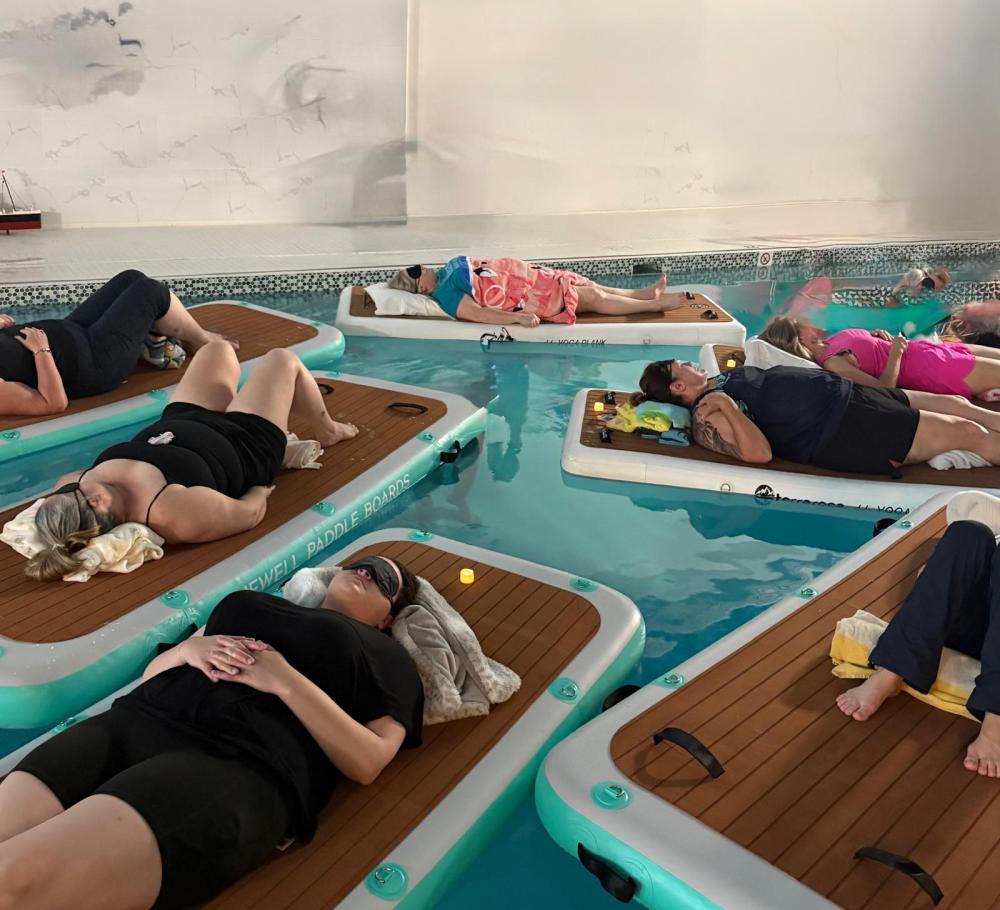
Traditional sound baths usually take place on yoga mats or comfortable seating, while floating sound baths invite you to rest on specially designed mats above the water.
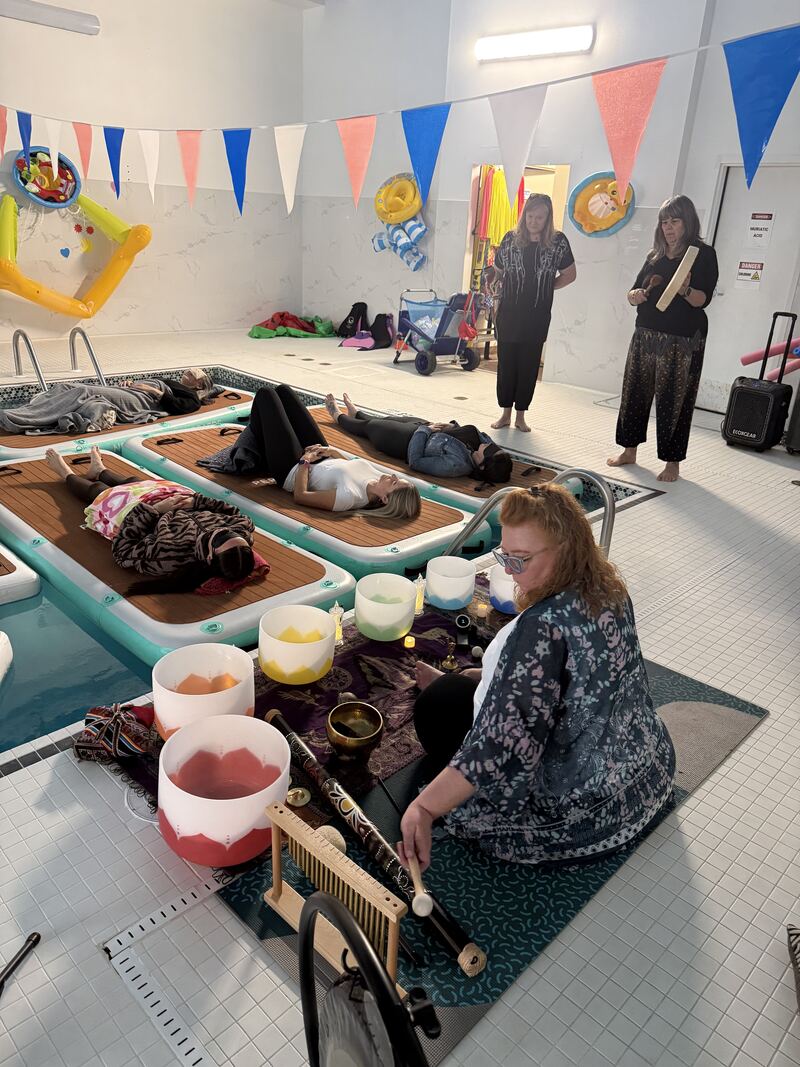
Both feature beautiful sounds from instruments such as crystal singing bowls, gongs and chimes. The main difference is the environment.
At Lazy Day Wellness, we offer sound-based experiences in Calgary and Airdrie, including our signature Float & Flow floating sound baths.
If you’re deciding which type of sound bath to try, here’s what you should know.
What Is a Traditional Sound Bath?
A traditional sound bath usually takes place in a quiet indoor space, such as a yoga studio, wellness centre or community hall.
Participants lie on mats, rest on cushions or sit comfortably while a practitioner plays instruments.
The experience is designed around listening and relaxation.
Because you’re resting on a stable surface, you can easily adjust your position, sit up, or choose a seated option where available.
Traditional sound baths appeal especially to people who prefer to stay on solid ground.
What Is a Floating Sound Bath?
A floating sound bath combines the sounds of a traditional session with the gentle sensation of resting on water.
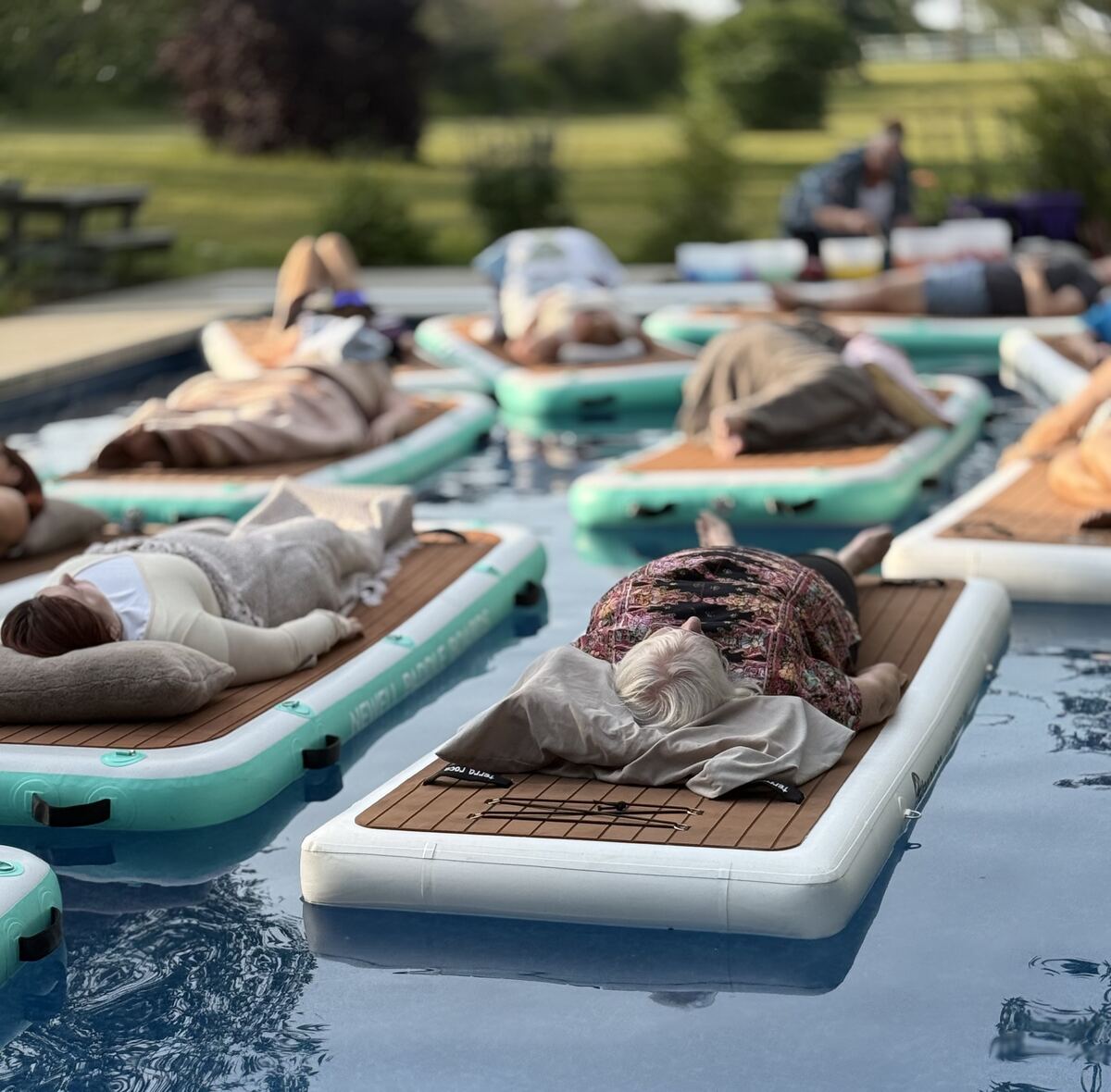
Instead of lying on
the floor, participants settle onto floating mats in an indoor pool.
At Lazy Day Wellness, our Float & Flow experience keeps guests dry while they enjoy the sounds of crystal singing bowls, gongs, and chimes.
The water adds subtle movement, creating an experience that feels different from resting on a yoga mat.
You don’t need
to swim or enter the water to participate.
Floating vs. Traditional Sound Baths: What’s the Difference?
| Feature | Traditional Sound Bath | Floating Sound Bath |
|---|---|---|
| Where you rest | Yoga mat, cushion or chair | Floating mat above water |
| Environment | Studio, hall or wellness space | Indoor swimming pool |
| Movement | Generally stationary | Gentle movement from the water |
| Clothing | Comfortable everyday clothing | Comfortable everyday clothing |
| Swimming required | No | No |
| Water exposure | None | Designed to keep guests dry |
| Experience | Immersive sound in a stable setting | Immersive sound with a floating sensation |
| Best suited for | Guests who prefer a stable surface | Guests curious about a water-based experience |
Neither experience is inherently better. The right choice depends on your preferences and comfort.
How Does Floating Change the Experience?
The biggest difference is the sensation of water supporting you.
On a traditional yoga mat, you remain connected to a firm surface.
On a floating mat, you may notice gentle movement as the water shifts beneath you.
For some guests, this creates an enjoyable feeling of weightlessness or separation from their everyday surroundings.
Others may prefer the familiarity and stability of a floor-based session.
The sounds themselves can be equally beautiful in either setting.
Which Sound Bath Is Better for Beginners?
Both can be excellent choices for first-time guests.
If you’re new to sound baths and feel more comfortable remaining on a stable surface, a traditional experience may be a good starting point.
If you’re curious about trying something different and feel comfortable resting above water, a floating sound bath can be a memorable introduction.
At Lazy Day Wellness, our team explains the floating experience and helps guests get settled before the session begins.
You don’t need previous experience with sound baths, meditation or floating.
Which Is More Relaxing?
Relaxation is personal.
Some guests love the gentle motion of floating. Others prefer the stillness of a yoga mat.
The practitioner, instruments, room environment, comfort, and your own preferences can all shape your experience.
There isn’t enough scientific evidence to conclude that floating sound baths are universally more relaxing or therapeutically effective than traditional sound baths.
Instead of choosing based on promised results, choose the setting that sounds most enjoyable to you.
What About Comfort and Accessibility?
Comfort matters when choosing the right experience.
Traditional Sound Baths
Traditional sessions may be easier for guests who prefer a chair or need to change position frequently, as long as the organizer offers suitable seating.
Floating Sound Baths
Floating sessions require guests to transfer onto and off a floating mat.
At Float & Flow, our team assists guests, with a pool attendant in the water and additional staff poolside.
If you have mobility limitations, balance concerns or questions about the setup, contact us before booking so we can discuss whether the experience is suitable.
What Should You Bring?
For either type of sound bath, comfortable clothing is a good starting point.
Traditional sessions may require a yoga mat, pillow or blanket, depending on the venue.
For Float & Flow, we recommend a small pillow and one or two small blankets to make your experience extra cozy.
We provide the floating equipment, plus comforts like an eye mask and aromatherapy options.
Because Float & Flow is a dry-floating experience, you don’t need to bring swimwear.
Can You Experience Both Types of Sound Baths in Calgary?
Yes.
Calgary offers traditional sound baths in studios and community spaces, as well as specialized floating experiences.
Lazy Day Wellness offers Float & Flow at selected indoor pool venues in Calgary and Airdrie. We also offer non-floating sound-based experiences at selected times and locations.
Our schedule changes throughout the year, so the best way to find your next opportunity is to check our current sessions.
Frequently Asked Questions
Is a floating sound bath the same as a float tank?
No. Float tanks generally involve floating directly in water, often in an enclosed environment. Float & Flow uses floating mats in a shared indoor pool, accompanied by a live sound bath.
Will I get wet during a floating sound bath?
Float & Flow is designed to keep you dry. Guests rest on floating mats above the water, although occasional splashes are possible.
Do floating sound baths cost more?
They sometimes do. Floating experiences involve specialized mats, pool facilities and additional staff. Pricing depends on the venue and organizer.
Can I attend a floating sound bath alone?
Absolutely. You can book individually and enjoy the experience alongside other guests.
Can I try both types of sound bath?
Of course. Trying both is a great way to discover which setting you prefer.
Find Your Favourite Way to Unwind
Whether you prefer the stability of a traditional sound bath or the gentle movement of floating above water, both experiences offer something special.
At Lazy Day Wellness, we believe relaxation doesn’t need to be complicated.
Sometimes all you need is a comfortable place to rest, beautiful sounds and a little time away from the everyday.
Curious about floating?
Discover Float & Flow and book your next sound bath in Calgary or Airdrie.
You can also explore Lazy Day Wellness for more ways to unwind.
Meet the Lazy Day Wellness practitioners who guide Float & Flow sessions.
Keep reading: the complete beginner’s guide to floating sound baths or sound baths in Calgary.